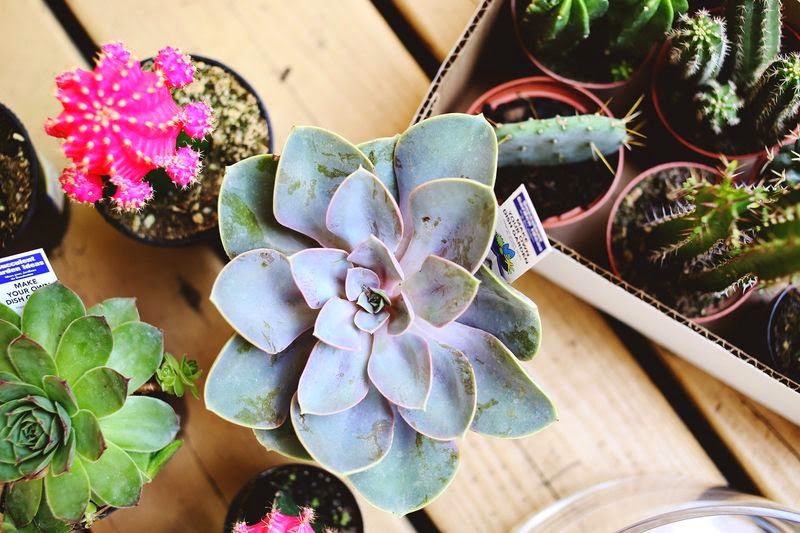
Supplies Needed: A wide, shallow vase (mine is approximately 10 inches wide by 5 inches high), rocks, soil, cactus plants you love (you can mix in some succulents and aloe too if you like!) and a shovel. This project takes about 20 minutes to complete.
Cacti and succulent plants rarely need to be watered. Most people say to water them once or twice a month or when the soil is completely dry.
Step 1: Add some rocks to the bottom of the vase. This will help with drainage when you water them.
Step 2: Add soil. I filled mine to about an inch from the top, but it wasn't densely packed so there was still plenty of room for plants.
Step 3: Plant a group of small plants in the soil. Be sure to space out any colorful cacti.
Step 4: Cover the top of the soil with a thin layer of rocks. It's just for looks! So cute... done!
Botanical Name: Zamioculcas zamiifolia ZZ Plant has become increasingly popular in recent years and I believe it deserves all the attention it’s been getting. The Aroid family has given us more dependable house plants than any other group and Zamioculcas zamiifolia is no exception. This is a worthwhile house plant to add to your collection. ZZ makes a great room accent and practically thrives on neglect. This easy-going house plant is forgiving if you forget to water, tolerates low light, and rarely needs fertilized. Want more? It also seems to shrug off pests. Growing from rhizomes, it has thick, upright stems bearing narrow, dark-green glossy leaves. Keep the leaves clean by gently wiping them with a damp cloth. Don’t use leaf shine products, which can damage the plant. Small, insignificant flowers — consisting of a spadix surrounded by a spathe — may appear at the base of plants in summer, although ZZs rarely flower indoors. A slow-grower indoors, ZZ plant rarely needs...
Pest attractors Often, while people take the best precautions to keep their home insect and rodent free, the problem that is inhibiting the insects is hidden in plain sight. The beautiful flowers, fruits, and leaves of your garden, might be the reason for pests, snakes, and insects in your home! Ivy One of the most popular and beautiful climbing plants is the Ivy. And so, people love having it in their garden. But, the thick leaves and vines of Ivy are the perfect hiding spots for aphids, spiders, and beetles. Bamboo Bamboo is another excellent choice when it comes to a home garden. It grows quickly, has tall branches, and just looks regal at times. But sadly, Bamboo is also a magnet for pests. Aphids and mites can infest bamboo, and the dense leaves can become home to snakes. Citrus fruits and plants Another insect magnet is citrus plants. Orange, lemon, lemon balm, and the likes all can attract pests because of their fruit and scent. Plus, the fruits on the plant will attract rode...




Comments
Post a Comment